Aircraft Loan Down Payments: What Lenders Require by Aircraft Class
Published lender guidance puts the usual aircraft loan down payment at about 15% of the price for Part 91 use, and about 30% for Part 135 charter use. Older aircraft, interest-only or asset-based structures and weaker credit can push the requirement higher. Each lender sets its own terms, so treat these as starting points.
Key takeaways
- AOPA Aviation Finance says lenders typically finance up to 85% of the price for Part 91 use, which means at least 15% down.
- AOPA Aviation Finance describes 30% down as typical for commercial use such as Part 135 charter.
- Use, aircraft age and valuation can each raise the required down payment.
- Lenders generally base the loan on the lower of price or appraised value, so a low appraisal means more cash from you.
- Plan for closing costs, inspection and reserves on top of the down payment.
How much down payment do aircraft lenders require?
For aircraft flown under Part 91 (personal and corporate use), AOPA Aviation Finance says lenders typically finance up to 85% of the purchase price, which means a minimum down payment of 15%. For commercial use such as Part 135 charter, the same source describes 30% down as typical. These are published guidance from a specialist lender, not rules, and every lender sets its own terms.
The reason is risk. A lender is protected only if the aircraft can be sold for more than the loan balance. The more the aircraft is flown, and the more the loan depends on business revenue instead of an owner's personal finances, the more cushion the lender wants.
| Situation | Guidance | Source |
|---|---|---|
| Part 91 use, loan of $100,000 or more | About 15% down, with a 20-year amortization as a best case | AOPA Aviation Finance |
| Part 91 use, loan of $50,000 to $100,000 | About 20% down, 15-year amortization | AOPA Aviation Finance |
| Loans near $1,000,000 and up | Negotiable; examples include 15% down on 15 years or 20% down on 20 years | AOPA Aviation Finance |
| Part 135 or other commercial use | About 30% down is typical | AOPA Aviation Finance |
| Interest-only or asset-based structures | Larger down payments, in some cases up to 40% | AOPA Aviation Finance |
AOPA Aviation Finance also notes that highly qualified applicants may find as little as 10% down, or occasionally nothing down, but treat that as an exception.
Does the down payment change by aircraft class?
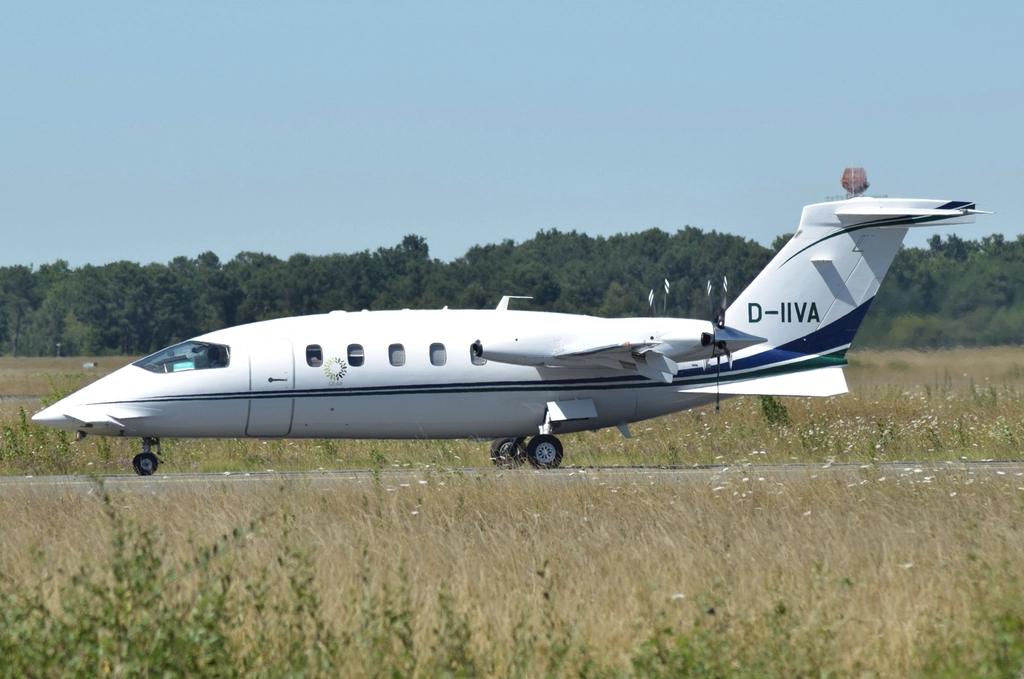
Often it does, but the published guidance leans more on use, age and structure than on the aircraft class itself. A single-engine piston trainer, a turboprop and a light jet will each be judged on how well they hold value, how many buyers exist for them and how hard they will be flown. Lenders generally want more cushion where resale is harder, such as older or less common models. Ask each lender how it treats your specific make, model and year.
That means the same $400,000 aircraft can need very different cash depending on whether it is a private owner's airplane or the fleet's primary training or charter aircraft. When you compare lenders, give each one the same facts about use and hours so the quotes line up. Class-level details are on the aircraft pages, such as the Cessna 172.
What raises the down payment you need?
AOPA Aviation Finance names three drivers: usage, aircraft age and aircraft valuation. In practice, these show up as:
- Commercial use. Part 135 charter, flight training and rental flying put more hours on the aircraft than private flying.
- Aircraft age. AOPA Aviation Finance lists aircraft age as a factor that can push the requirement above the 15% baseline.
- Appraisal below price. Lenders generally lend against the lower of the price or the appraised value. If you agree to pay more than the appraisal supports, the gap is your cash.
- Loan structure. Interest-only payments, longer fixed terms and asset-based underwriting generally call for more down.
- Credit and liquidity. Weaker credit or thin cash reserves can raise the requirement, and strong ones can lower it.
Worked example: how a down payment changes the loan
These numbers are hypothetical and only show the math. Suppose a flight school agrees to buy a used trainer for $400,000 and the appraisal comes in at $400,000.
The last line is the one operators miss. A $30,000 shortfall in the appraisal raises the cash you need by $25,500, because the lender's advance is based on the lower number. Ask your lender how it will use the appraisal before you sign a purchase agreement, and consider making the purchase contingent on financing.
Why is the Part 135 down payment larger?
Charter aircraft fly under the air carrier rules in 14 CFR Part 135, and lenders see higher utilization, more maintenance events and revenue that depends on a certificate, a management agreement or a few customers. AOPA Aviation Finance describes 30% as typical for this use. Lenders will also want to see your certificate, trip history and how the aircraft is covered by insurance. Our guide to financing a Part 135 charter aircraft covers what to bring.
How do you plan the cash you need at closing?
The down payment is not the only cash. Build a simple checklist before you apply:
- Down payment, calculated on the lower of price and expected appraisal.
- Pre-buy inspection and any squawks you will fix before closing.
- Appraisal, title search, escrow and registration fees.
- Insurance deposit or first premium.
- Sales or use tax, where it applies in your state. Confirm with a tax advisor.
- Working capital reserves so a major maintenance event does not strain you.
The aircraft loan calculator lets you test the payment at several down payment levels. If the numbers only work at the lowest possible down payment, consider whether a lease, covered in aircraft lease vs buy, fits better. See also acquisition loans.
Can you lower the down payment you need?
Sometimes. Strong credit, liquidity and a clean operating record help, as do a newer, popular aircraft model and a shorter amortization. Offering other collateral or a guarantee can also change the terms, though it adds risk to you, so understand what you are signing. Ask each lender for terms at two or three down payment levels, and compare the total cost of borrowing instead of only the payment.
Also ask whether the lender will count trade-in equity, a refundable deposit or a related-party contribution toward the down payment. Policies differ, and you do not want to learn at the closing table that part of your cash does not qualify. Get the lender's required amount and acceptable sources of funds in writing early, then build the purchase budget around them.
Whatever you choose, verify terms with the lender in writing and talk to your tax advisor and aviation counsel about your situation. If you want to organize your documents first, you can start a deal file with JetFinex and see what a lender will ask for.
Aircraft Loan Calculator
Monthly payment, total interest and balloon, with a balance chart.
Frequently asked questions
What is the minimum down payment on an aircraft loan?
AOPA Aviation Finance describes 15% as the usual minimum for Part 91 use, with higher amounts for commercial use, older aircraft or certain loan structures. Some strong borrowers may negotiate less, but that is the exception.
Do charter operators need a larger down payment?
Usually yes. AOPA Aviation Finance describes 30% down as typical for commercial use such as Part 135 charter, because the aircraft is flown harder and the lender is relying on business revenue.
Can the down payment be borrowed or financed?
Most lenders want the down payment to be your own cash or equity, not borrowed money. Ask the lender how it treats trade-in equity, a deposit or funds from a related party.
Does a larger down payment lower the rate or payment?
It lowers the loan amount and the payment, and some lenders price lower loan-to-value deals more favorably. Ask for quotes at two down payment levels and compare.
Sources
- AOPA Aviation Finance, What is the typical down payment percentage on a jet?
- AOPA Aviation Finance, Navigating down payments for a $100K aircraft
- AOPA Aviation Finance, How much airplane can I afford?
- eCFR, 14 CFR Part 135, Operating requirements: commuter and on demand operations
This guide is educational and is not tax, legal or investment advice. See our editorial standards and disclosures. Spot an error? Tell us.