Aircraft Residual Values: What Drives Them and Why Lenders Care
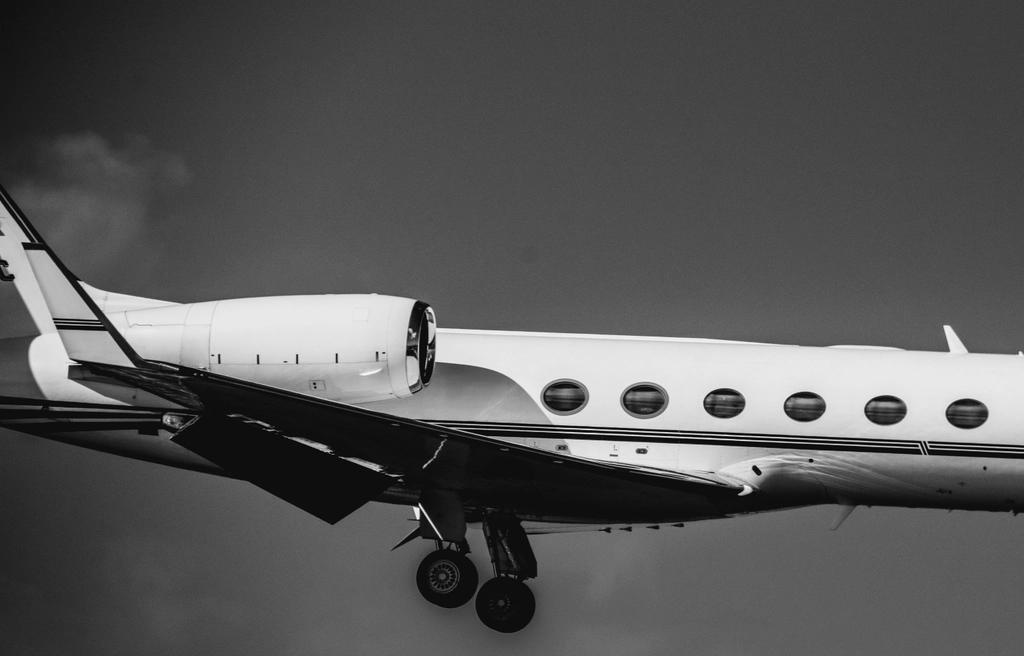
Residual value is what an aircraft will be worth at a future date, usually when a loan matures or a lease ends. NBAA describes it as the amount a bank can recover from an aircraft after a lease is up, or as collateral on a loan. Lenders use their residual estimate to decide how much to advance, how long to lend and how big a balloon can safely be, and lessors use it to price the lease.
Key takeaways
- Residual value is the forecast worth of the aircraft at a future date, and it is the lender's or lessor's protection if the borrower cannot pay.
- NBAA reported in 2016 that lenders assumed 6% to 8% a year of depreciation on aircraft up to five years old, and that banks financed 70% to 100% of value depending on credit and estimated residual value.
- Make and model, age, airframe and engine times, avionics, condition, use and the state of the resale market all drive residual value.
- A balloon should be smaller than a conservative estimate of the aircraft's value at maturity; otherwise the borrower carries a shortfall.
- In an operating lease the lessor carries residual risk; in a loan or finance lease, the owner does.
What is aircraft residual value?
Residual value is what an aircraft is expected to be worth at a future date: when a loan matures, when a lease ends, or when you plan to sell. NBAA describes it as the amount a bank can recover from an aircraft after a lease is up, or as collateral on a loan. It is a forecast, not a price, and it is one of the most important numbers in any aircraft financing because it decides who is exposed if values fall.
Residual value is related to, but different from, today's appraised value. An appraisal tells a lender what the aircraft is worth now. The residual estimate tells it what the same aircraft is likely to be worth in five or ten years, after more hours, more age and whatever the market does in between. Our guide to what an aircraft appraisal covers explains the starting point.
Why do lenders care so much about residual value?
Because the aircraft is their fallback. If a borrower stops paying, the lender recovers what it can by selling the aircraft. A lender wants the loan balance to stay below the aircraft's likely value at every point in the term, and especially at the end if there is a balloon.
That shows up in three terms:
- Advance rate: how much of the price or value the lender will lend. NBAA reported in 2016 that banks and non-bank lenders financed 70% to 100% of an aircraft's value depending on the borrower's credit and the aircraft's estimated residual value. Business Jet Traveler reported in 2022 that advance rates of only 75% or 80% of the purchase price were not unusual, and that some banks lent against a lower estimated market value rather than the price paid.
- Term and amortization: the faster values are expected to fall, the faster the lender wants the loan paid down.
- Balloon size: a balloon is only safe if the aircraft is still worth more than the balloon when it falls due.
Business Jet Traveler quoted a PNC Aviation Finance executive describing one of the biggest jet financing questions as what the jet will be worth when the loan matures. That question sits behind most of the terms you are offered.
What drives an aircraft's residual value?
Several factors, some you control and some you do not:
| Driver | Why it matters |
|---|---|
| Make and model | Popular models with deep resale markets tend to be valued higher, per AOPA Aviation Finance |
| Age and total time | AOPA Aviation Finance notes very high airframe time, approaching 10,000 hours, makes loans hard to get |
| Engine time since overhaul | Compared with averages for the year, make and model; an engine near overhaul lowers value |
| Avionics | AOPA Aviation Finance calls the avionics package a third important aspect of valuation |
| Condition, paint and interior | Recent work can add value, and the more recent the work, the greater the effect |
| Use | Higher-utilization aircraft, such as charter or fractional aircraft, accumulate hours and wear faster |
| Market conditions | AvBuyer notes residuals depend on general economic conditions and the pre-owned market at the time of sale |
Segment matters too. AvBuyer reports that in past downturns the very light and light jet sectors were hit harder than others. And on charter use, AvBuyer reports that lenders see Part 135 aircraft as having heavier wear and potentially lower residual values, which feeds into shorter terms and lower advance rates. See financing a Part 135 charter aircraft.
How fast do lenders assume aircraft lose value?
There is no single rate, and assumptions change with the market. NBAA's 2016 reporting is a useful historical reference: before the 2008 recession, it was commonly assumed business aircraft lost 4% to 6% of their value a year; after it, lenders assumed 6% to 8% a year for aircraft from new to five years old, and possibly more than 10% a year for aircraft ten years and older, though age alone did not set the rate. The same article noted that predicting what a particular aircraft will be worth in 10 or 12 years had become harder.
Treat those as dated reference points. A lender quoting you today will use its own view and current appraisal data, and piston trainers, turboprops and jets each follow their own curves.
Worked example: when a balloon outruns the aircraft
These numbers are hypothetical and only show the math. Suppose a $3,000,000 aircraft is financed at 80% ($2,400,000) at 7.0%, on a 10-year term with a 20-year amortization. The payment is about $18,607 a month, and about $1,602,600 is still owed as a balloon after 10 years. What is the aircraft worth then?
At 6% a year the aircraft barely covers the balloon. At 8% or 10% the owner owes more than the aircraft is worth and must bring cash to sell or refinance. That is exactly why lenders size balloons against a conservative residual, and why they may cut the advance rate or shorten the amortization when they are less sure of values. Read more in balloon payments on aircraft loans, and test structures in the aircraft loan calculator.
How does residual value change lease pricing?
In an operating lease, the lessor owns the aircraft and gets it back, so the lessor carries the residual risk. The rent has to cover the drop in value over the lease plus the lessor's return. A higher expected residual means less value to recover, so the rent can be lower. That is why aircraft with strong resale markets can lease well, and why return conditions matter: they protect the residual the lessor priced in.
In a finance lease or a loan, you carry the residual risk because you own the aircraft at the end. Business Jet Traveler noted that leasing passes residual value risk to the lessor, which is part of what a lessee pays for. The operating lease vs finance lease comparison and the lease vs finance calculator show how the resale assumption swings the answer.
Some manufacturers offer residual value guarantees as a sales incentive. AvBuyer notes that in business aviation these usually run five to eight years and are negotiated case by case, and that it is wise to agree on a third-party appraisal if the owner's and guarantor's appraisers differ significantly.
How can owners protect residual value?
- Keep complete, organized maintenance records; gaps cost value at resale and at appraisal.
- Stay on a recognized maintenance program, and consider an engine program where lenders or buyers expect one.
- Plan avionics upgrades around mandates and market expectations for the type.
- Track utilization against the type's averages, and price high-hour use into your plans.
- Avoid structures where the balloon assumes the market will be kind.
This article is general information, not individual advice. If you are weighing a loan, lease or sale-leaseback and want the residual question answered on real quotes, you can start a deal file with JetFinex.
Aircraft Lease vs Finance Calculator
Total cost of leasing versus buying over the same term.
Want the payment on a specific aircraft? Try the aircraft loan calculator: set the price, down payment, rate, term and balloon and see the monthly payment and total interest.
Frequently asked questions
What is residual value on an aircraft?
It is the expected value of the aircraft at a future point, such as the end of a loan or lease. NBAA defines it as the amount a bank can recover from an aircraft after a lease is up, or as collateral on a loan.
How fast do business aircraft depreciate?
It varies by type, age and market. NBAA reported in 2016 that lenders had moved from assuming 4% to 6% a year before the 2008 recession to 6% to 8% a year for aircraft up to five years old, and possibly more than 10% for aircraft ten years and older. Use current appraisals for any real decision.
Why does residual value change my loan terms?
The lower the lender expects the aircraft to be worth later, the less it will advance, the faster it will want the loan paid down and the smaller any balloon it will allow.
Does charter use lower residual value?
Lenders often assume so. AvBuyer reports that lenders see Part 135 aircraft as having heavier wear and potentially lower residual values, which can mean shorter terms and lower advance rates.
Who carries residual value risk in a lease?
In an operating lease the lessor does, because you return the aircraft. In a finance lease or a loan, you do, because you own the aircraft at the end.
Sources
- NBAA, Aircraft financing: is the recovery underway?
- AvBuyer, BizJet residual value: how to minimize the anxiety
- Business Jet Traveler, Financing a business jet in today's volatile market
- AOPA Aviation Finance, How are airplanes valued?
- AvBuyer, Part 91 and Part 135 operations: aircraft financing differences
This guide is educational and is not tax, legal or investment advice. See our editorial standards and disclosures. Spot an error? Tell us.