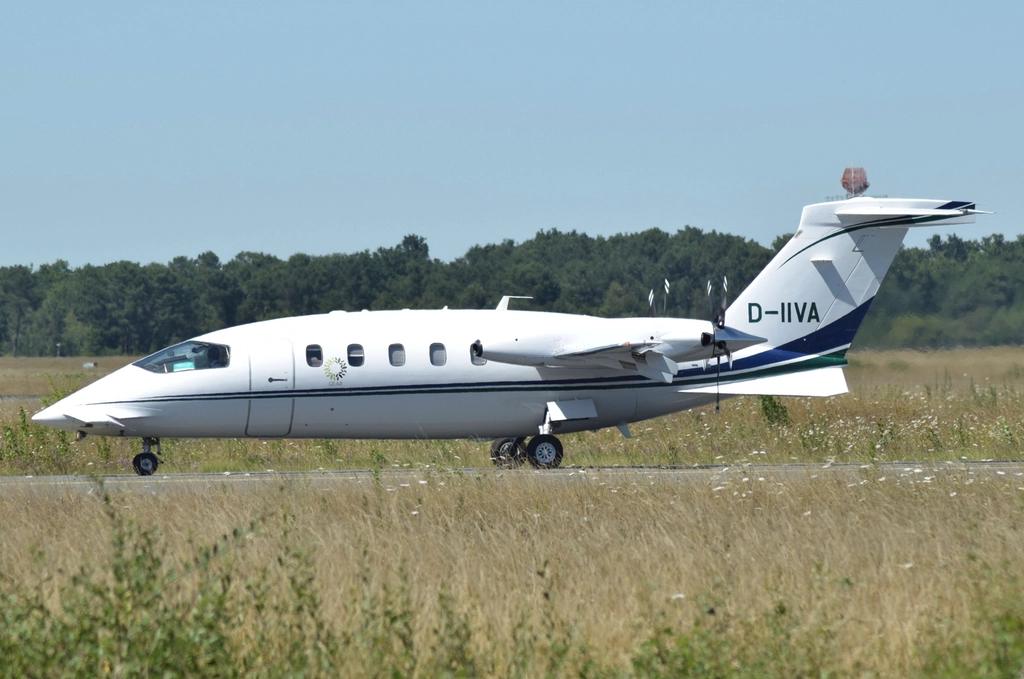
Financing a Turboprop for Regional Charter: What Lenders Look For
Financing a turboprop for regional charter usually means a turbine loan or lease with a 5-year term on a longer amortization, plus charter-specific conditions. AOPA Aviation Finance says its lenders accept Part 91 and 135 use, standard terms are 15-year amortization with a 5-year term, and most require an engine program. Lenders quoted by AvBuyer add that charter use can bring higher rates, shorter terms, lower advance rates and annual hour limits.
Key takeaways
- Expect turbine-style terms: AOPA Aviation Finance lists 15-year amortization with a 5-year term as standard, with down payments that could be as low as 10%.
- Most turbine lenders require an engine maintenance program, and lenders quoted by AvBuyer say charter loans often carry one too.
- Charter use can mean higher rates, shorter terms, lower advance rates and annual hour caps; disclose charter plans up front.
- Single-engine turboprops carrying passengers under IFR must meet extra Part 135 equipment and engine trend monitoring rules.
- Size the payment against a downside charter forecast, not your best month.
How do you finance a turboprop for regional charter?
You finance a charter turboprop with a turbine loan or lease, underwritten on both your credit and the aircraft, with extra conditions because it will fly for hire under Part 135. The core terms look like other turbine deals. The differences come from how the aircraft earns money and how hard it flies.
AOPA Aviation Finance, which arranges loans through a network of lenders, describes its turbine and turboprop program this way:
- Term: "Standard terms will be 15 year amortization with 5 year term." The same page also advertises terms up to 20 years, so ask which applies to your aircraft.
- Down payment: set by aircraft year, make and model, and "could be as low as 10%."
- Rate types: credit and asset-based loans, with fixed, floating and hybrid rates.
- Charter use: "Part 91 and 135 usage is considered acceptable to our lenders."
- Engine program: "most of our lenders will require an engine program."
For published starting rates, FLYING Finance listed turboprop and jet loans from 6.53% in October 2026. Starting rates are for the strongest files; check the dated table on our aircraft loan rates page before you model a payment. For the full borrowing process, see the airplane financing guide.
How does charter use change the loan terms?
Charter use usually makes the terms tighter. In AvBuyer's 2023 survey of lenders, people from Global Jet Capital, AOPA Aviation Finance, PNC Aviation Finance and the National Aircraft Finance Association described these differences for Part 135 aircraft:
- Higher rates and shorter terms. A Global Jet Capital executive said terms may be "materially different," with shorter terms and higher rates depending on the borrower's strength.
- Lower advance rates. AOPA Aviation Finance said charter use typically brings lower advance rates. NAFA said it is prudent to expect a higher down payment.
- Hour caps. AOPA Aviation Finance said "many lenders will limit the total hours flown in a year," and may require extra principal reduction above the cap.
- Engine program. Lenders frequently require the aircraft to be enrolled in an engine maintenance program.
- Operator review. Lenders review the operator and its documents, and may use a charter addendum or a tri-party agreement with the certificate holder.
- Fewer lenders. Some lenders will not finance Part 135 aircraft at all.
The lesson from the same article is simple: tell the lender about charter use at the start. A deal priced for private use can fall apart late if the charter plan comes out in diligence. Our guide to financing a Part 135 charter aircraft covers the full document list.
Does a single or twin turboprop change the financing?
It changes the rules you operate under, which changes costs, which changes what a lender will lend. Part 135 allows single-engine aircraft to carry passengers under IFR, but adds requirements that a lender will expect to see in your maintenance program.
| Rule | What it requires | Why a lender cares |
|---|---|---|
| 14 CFR 135.163(f) | Single-engine aircraft carrying passengers under IFR need two independent electrical power sources, or a standby source able to carry 150% of essential loads for at least one hour | Equipment must be installed and maintained before the aircraft can earn IFR passenger revenue |
| 14 CFR 135.163(g) | Multi-engine aircraft need at least two generators or alternators, each on a separate engine | Usually met by the type design of common twins |
| 14 CFR 135.421(c) and (e) | Single-engine IFR passenger aircraft need an engine trend monitoring program, with oil analysis where applicable, and recorded results | Trend data supports engine condition and collateral value |
| 14 CFR 135.411(a) | Aircraft type certificated for 9 or fewer passenger seats follow Parts 91 and 43 plus listed Part 135 sections; 10 or more seats need a full Part 135 maintenance program | Seat configuration on the type certificate sets your maintenance cost base |
Check the type certificate data sheet for the passenger seating configuration of the exact model you are buying, not the brochure. Our aircraft pages for the Pilatus PC-12, King Air 350 and Cessna Caravan cover how lenders view each type.
Why do lenders want an engine program on a charter turboprop?
The engines are a large part of a turboprop's value, and charter flying uses them up faster. An hourly engine program turns a large, uncertain overhaul bill into a known cost per hour, and keeps the value in the collateral.
Pratt and Whitney Canada describes its ESP program for PT6A engines as "a pay-per-hour maintenance cost guarantee program" covering major scheduled events, basic unscheduled engine and accessory maintenance and required service bulletin upgrades. It also says ESP coverage transfers to later owners at sale, which supports resale value. Other engine makers and shops offer their own programs; compare what each covers.
If the aircraft you want is not enrolled, ask what a buy-in would cost before you sign the purchase agreement. If an overhaul is close, read financing an aircraft engine overhaul and price it into the deal.
What does a charter turboprop payment look like?
The numbers below are hypothetical and show the math only. They are not a quote, a market price or a rate offer.
The shorter amortization that lenders may require for charter adds about $75,500 a year to fixed costs in this example. At a contribution of $1,000 per charter hour, also hypothetical, that is roughly 76 more hours a year just to cover the payment. Run your own figures in the aircraft loan calculator, then put the annual payment into the charter breakeven calculator. Our explainer on charter breakeven hours walks through each input.
Also plan for the balance at the end of the term. A 5-year term on a 15-year amortization leaves a large amount to refinance or pay off, so your plan should show how you will handle it.
What insurance and tax rules apply?
Air taxi operators registered under 14 CFR Part 298 must carry at least the liability minimums in 14 CFR 205.5. These include $75,000 per person and $300,000 per aircraft per occurrence for third parties, $100,000 per occurrence for property damage, and passenger coverage of $75,000 per passenger, with a per-aircraft total of $75,000 times 75% of installed passenger seats. Those are regulatory floors. Your lender's insurance covenant, hull value requirement and loss payee terms are set in the loan documents and can be higher, so get insurance quotes before you finalize the budget.
On tax, 26 U.S.C. 4261 imposes an excise tax on amounts paid for taxable air transportation of persons, usually collected from the customer. Confirm how your operator bills and remits it, and how depreciation and use percentages apply to you, with a tax advisor.
What should you bring to a lender?
- Charter plan: routes, customers, contracts or letters of intent, and expected hours per year.
- Operator documents: your Part 135 certificate and operations specifications, or the management and charter agreement with the certificate holder.
- Aircraft records: pre-buy inspection, engine trend data, engine program status and time remaining to major events.
- Breakeven: base and downside cases that still cover the payment, with any hour cap built in.
- Financials: business and personal statements, tax returns and liquidity for reserves.
- Insurance: quotes that meet Part 205 minimums and the lender's covenant.
If you want help assembling that file for lenders and lessors, JetFinex can organize it with you.
What should you do next?
Shortlist turboprops whose maintenance program, engine enrollment and seating configuration fit your charter plan. Ask two or three lenders that finance Part 135 aircraft for term sheets, and compare hour caps and engine program requirements alongside the rate. Then confirm the operating structure with aviation counsel and the tax treatment with your advisor. This article is general information, not legal, tax or financing advice.
Charter Aircraft Breakeven Calculator
Charter hours a year to cover fixed costs.
Want the payment on a specific aircraft? Try the aircraft loan calculator: set the price, down payment, rate, term and balloon and see the monthly payment and total interest.
Frequently asked questions
Can you get a loan on a turboprop used for Part 135 charter?
Yes. AOPA Aviation Finance states that Part 91 and 135 usage is acceptable to its lenders, though some lenders do not finance Part 135 operations at all, so ask early and disclose the charter use.
How long can you finance a turboprop?
AOPA Aviation Finance lists 15-year amortization with a 5-year term as standard for turbine and turboprop loans. Lenders quoted by AvBuyer say charter use often brings a shorter term and amortization.
Do lenders require an engine program on a charter turboprop?
Usually. AOPA Aviation Finance says most of its lenders require an engine program, with some exceptions. Pratt and Whitney Canada's ESP is one pay-per-hour program for PT6A engines, and its coverage transfers at sale.
Can a single-engine turboprop fly charter passengers in IFR?
Yes, under Part 135 if it meets 14 CFR 135.163 equipment rules, including redundant electrical power, and the operator runs an engine trend monitoring program under 14 CFR 135.421.
What insurance does a charter turboprop need?
Air taxi operators registered under 14 CFR Part 298 must carry at least the liability minimums in 14 CFR 205.5. Your lender will also set hull and liability requirements in the loan documents, which you should read before you sign.
Sources
- AOPA Aviation Finance, Turbine and turboprop aircraft financing
- AvBuyer, Part 91 and 135 Ops: Aircraft Financing Differences (Gerrard Cowan, Feb. 20, 2023)
- FLYING Finance, Aircraft loan rates
- eCFR, 14 CFR 135.163, Equipment requirements: aircraft carrying passengers under IFR
- eCFR, 14 CFR 135.411, Maintenance applicability
- eCFR, 14 CFR 135.421, Additional maintenance requirements
- eCFR, 14 CFR 205.5, Minimum insurance coverage
- Pratt and Whitney Canada, ESP maintenance program
- Cornell Law School Legal Information Institute, 26 U.S.C. 4261, Imposition of tax (air transportation)
This guide is educational and is not tax, legal or investment advice. See our editorial standards and disclosures. Spot an error? Tell us.