Financing Avionics Upgrades and How They Affect Aircraft Value
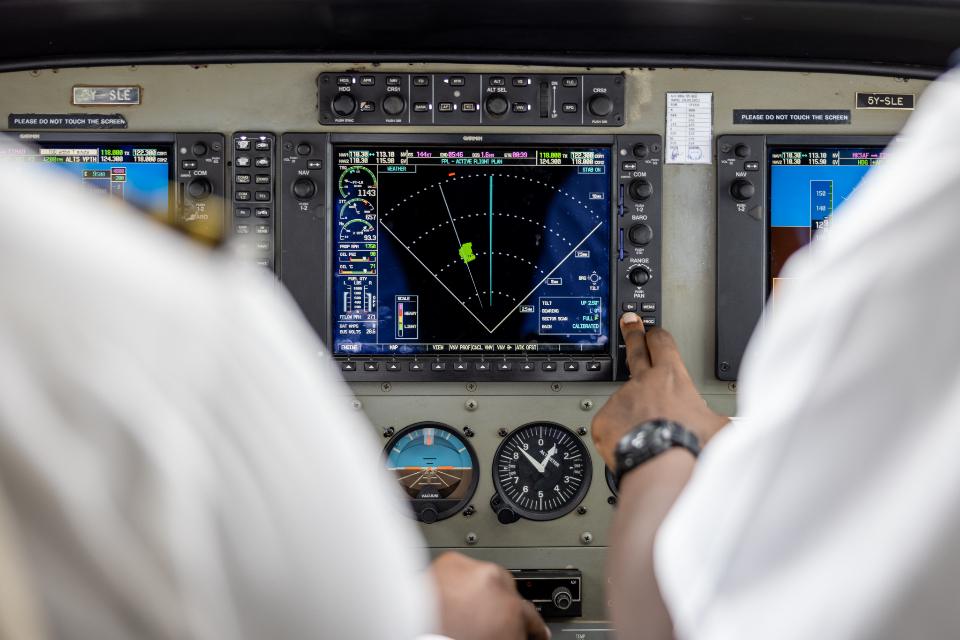
Lenders will often finance an avionics upgrade, but AOPA Finance says labor and installation usually cannot be financed and only part of the equipment cost is counted toward the aircraft's value. Expect to fund the labor and a share of the equipment yourself, and expect a lender to want an invoice from your avionics shop before it commits.
Key takeaways
- AOPA Finance says its lenders can finance up to 80% to 85% of the post-upgrade value of the aircraft.
- AOPA Finance says only about 50% to 70% of the equipment cost is added to the aircraft's value, and labor and installation are not financed.
- Lenders typically add value for avionics and major overhauls but not for paint and interior work.
- If the aircraft already has a loan, adding upgrade costs will likely mean refinancing it, which may cost you a favorable rate.
- Do not assume an upgrade pays for itself at resale: Forecast International notes the resale premium of a glass deck is typically smaller than the installed cost.
Can you finance an avionics upgrade?
Yes, often. AOPA Finance says lenders are often willing to include additional funds for upgrades, either as part of a purchase loan or in a refinance. The catch is that the lender sizes the loan against the aircraft's value after the upgrade, using its own view of how much value the equipment adds, and it generally leaves labor out.
That makes avionics different from most other loan purposes. A lender treats the aircraft as the collateral, so money spent on something that raises the collateral's value is easier to lend against than money spent on something that does not. AOPA Finance says lenders typically add value for avionics upgrades and major engine overhauls, and typically do not add value for paint and interior work.
For an operator, the practical question is rarely "can I borrow?" It is "how much cash do I still need, and is the upgrade worth more than it costs?" The rest of this guide works through both.
How much of the upgrade will a lender finance?
AOPA Finance gives three figures that fit together, each from a lender-affiliated source and each dated, so confirm them with your own lender:
- Loan-to-value: its lenders can finance up to 80% to 85% of the post-upgrade value of the aircraft.
- Value credit: in a 2019 article, it says only about 50% to 70% of the equipment cost is added to the total value.
- Labor: labor and installation costs are not included in the financing. A 2023 AOPA Finance article gives an example in which the lender covers 80% of a $100,000 suite, leaving the owner to pay the other $20,000 plus labor.
Put those together and you can see why the out-of-pocket amount surprises people. You pay the labor in full, plus the part of the equipment the lender does not count, plus the down payment gap that comes from the loan-to-value limit. For background on how those limits work on the base aircraft, read aircraft loan down payments by aircraft class.
What does the math look like? A hypothetical example
The numbers below are hypothetical and chosen for easy arithmetic. They are not a quote, and your lender's valuation will differ. The method follows the AOPA Finance figures above, using the middle of the 50% to 70% range.
On those assumptions the loan limit leaves room for $68,800, which looks like enough. But the labor is not financed, so the lender would lend against the equipment only: $60,000. The owner pays the $15,000 labor in cash, and the loan fits well within the limit. Change the assumptions and the picture changes. If the existing balance were $160,000, new money available would be only $28,800, and the owner would need to cover $46,200 of the $75,000 project from cash. The lesson is to run your own numbers, and an aircraft loan calculator will show how the larger balance changes the payment.
What if the aircraft already has a loan?
Adding upgrade costs will likely require refinancing the existing loan, according to AOPA Finance. That is a new transaction, and the 2023 AOPA article says the lender must re-verify your financial situation. It also warns that current rates may be higher than when you took the original loan, so refinancing can mean giving up a favorable rate.
There are three ways to handle this, and the right one depends on the numbers:
- Refinance everything into one larger loan. Simple, but the whole balance reprices. Compare using our refinancing guide and the refinancing structure page.
- Keep the old loan and pay cash for the upgrade. Preserves a low rate but drains liquidity, which matters for a flight school or charter operator that needs working capital.
- Ask your current lender for an additional advance. Some lenders will consider it. Terms vary by lender, so ask before you assume.
Whichever route you choose, tell the lender early. Many loan agreements restrict additional debt secured by the aircraft.
Does an avionics upgrade raise resale value by what it costs?
Usually not dollar for dollar. The lender credit of 50% to 70% of equipment cost described above is itself a signal that the market does not give full credit. Forecast International, writing about retrofits for one business jet model in 2026, makes the same point from the buyer's side: because the resale premium a glass deck commands is typically smaller than the installed cost, the buyer captures the spread. That comment concerns a specific jet, so do not treat it as a rule for every aircraft, but the direction is useful.
That does not make upgrades a bad idea. An upgrade can make an aircraft easier to sell, keep it usable for the kind of flying you do, or meet an equipage requirement. For instance, operating in much controlled airspace requires ADS-B Out equipment under 14 CFR 91.225. Compliance, safety and mission fit are reasons to upgrade that do not depend on the resale premium. Just do not count on the upgrade to repay itself when the aircraft is sold.
For a training or charter aircraft, ask a different question: what does the upgrade do for revenue? Better avionics can support instrument training, reduce cancellations or satisfy a customer or insurer. If you can tie the cost to those benefits, the case is stronger than a resale argument. See financing for flight schools and charter operators.
What should you do before you commit to a shop?
AOPA Finance says lenders need a project budget, a scope of work and a proposed invoice from your avionics shop. Get those in order first.
- Get a written, itemized quote that separates equipment, labor and any certification or paperwork costs.
- Ask the lender, in writing, how much of the equipment cost it will count toward value and whether labor is excluded.
- Ask how funds are disbursed. AOPA Finance says funds are split between the seller and the avionics shop on a purchase, so confirm the process for your deal.
- Check your current loan agreement for limits on additional debt or changes to the aircraft.
- Get a valuation from the lender's point of view. See what an aircraft appraisal covers.
- Plan downtime. The aircraft earns nothing in the shop, while payments, insurance and hangar costs continue.
- Compare the total cost of each funding route, not just the monthly payment.
If you are also facing an engine overhaul, the two projects can be financed together, provided the total stays within the loan-to-value limit. Our guide to financing an aircraft engine overhaul covers reserves and timing.
Lending terms change, and the figures in this guide come from the sources listed below on the dates shown. Confirm current terms with your lender and talk to a tax advisor about how the upgrade is treated for depreciation. When you are ready to organize the paperwork, you can start a deal file with JetFinex.
Aircraft Loan Calculator
Monthly payment, total interest and balloon, with a balance chart.
Frequently asked questions
Can I finance an avionics upgrade?
Often yes. AOPA Finance says lenders are often willing to include additional funds for upgrades, either in a purchase loan or in a refinance, if the total stays within the lender's loan-to-value limit.
Does the lender finance the labor to install avionics?
Usually not. AOPA Finance says labor and installation generally cannot be financed, unlike an engine overhaul where labor is usually included.
How much value does an avionics upgrade add for the lender?
AOPA Finance says only about 50% to 70% of the equipment cost is added to the total value for lending purposes. The lender's own valuation decides the figure, so ask for it before you commit.
What does the lender need to see?
AOPA Finance asks for the project budget and scope of work and a proposed invoice from your avionics shop of choice.
Sources
- AOPA Finance, Is It Possible to Finance an Aircraft That Includes Avionics Upgrades? (2019)
- AOPA Finance, Can You Finance an Airplane Purchase to Include Overhaul or Avionics Refurb? (2023)
- AOPA Finance, Avionics Finance
- Forecast International, Where to Deploy Capital in the Falcon 2000EX Retrofit Market (2026)
- eCFR, 14 CFR 91.225 Automatic Dependent Surveillance-Broadcast (ADS-B) Out equipment and use
This guide is educational and is not tax, legal or investment advice. See our editorial standards and disclosures. Spot an error? Tell us.