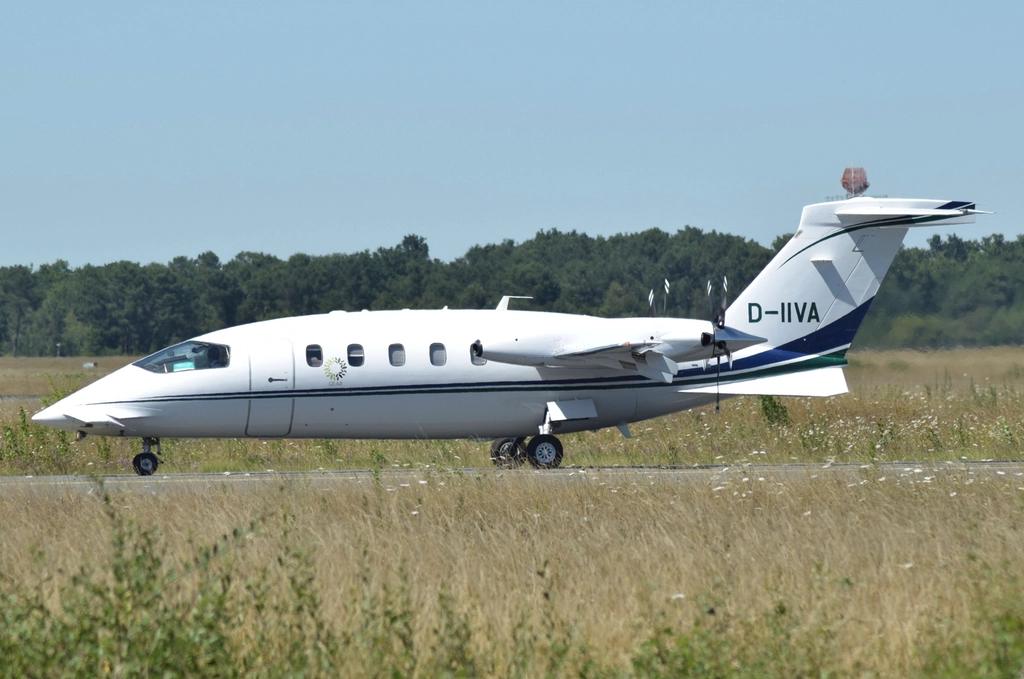
Owner-Flown Aircraft on a Part 135 Certificate: Financing Implications

You can usually finance an owner-flown aircraft that is also placed on a Part 135 certificate, but the lender must consent to charter use and will look at who holds operational control on each flight. Your own trips stay Part 91 flights, while charter flights belong to the certificate holder, and if you fly charter yourself you must meet its Part 135 pilot rules. Expect charter loan terms, such as the 30% down AOPA Aviation Finance describes as typical for Part 135 use.
Key takeaways
- Owner trips are usually Part 91 flights under the owner's operational control; charter trips are Part 135 flights under the certificate holder's control.
- If you want to fly your own aircraft on charter trips, 14 CFR 135.95 requires you to be qualified for that operation, including the annual checks in 135.293 and 135.299 and the operator's drug and alcohol testing program.
- An aircraft on a Part 135 certificate is maintained to the operator's program, which can add cost but also produces records lenders and buyers value.
- Lenders typically require a charter addendum, insurance that covers both the owner's and the operator's flights, and may cap annual hours.
- Charter revenue can offset part of the loan payment, but a lender will not count on it unless you show realistic hours.
Can you finance an owner-flown aircraft on a Part 135 certificate?
Yes, but the lender is financing a mixed-use aircraft, and it will underwrite both halves. Your own trips, where you are the pilot and you pay the costs, are usually Part 91 flights. Charter trips sold to the public are Part 135 flights run by the certificate holder. The loan documents have to allow both, and the lender has to be comfortable with who is in charge on each flight.
Many owner-pilots place an aircraft on a charter operator's certificate to offset ownership cost. That decision changes how the aircraft is maintained, insured, crewed and financed. In practice it means charter loan terms: AOPA Aviation Finance says lenders typically finance up to 85% of value for Part 91 use, while for Part 135 charter "30% down is typical for this type of usage." The basic borrowing steps are in our airplane financing guide; this article covers what changes when you keep flying the aircraft yourself.
Who has operational control when the owner flies?
The person who decides to start, conduct or end a flight has operational control, and that answer usually changes from flight to flight. In the common split arrangement described by Holland and Knight, the owner "remains in operational control of the aircraft for the private flights of the owner" under Part 91, and the charter manager, as the certificate holder, controls the charter flights under Part 135.
Lenders care because operational control decides who is legally responsible for a flight and which insurance and regulations apply. A flight where money changes hands but nobody with a Part 135 certificate holds operational control is the illegal charter risk that lenders and insurers fear most. If the aircraft is leased between your entities so you can fly it, 14 CFR 91.23 may also require a truth-in-leasing clause, which FAA Advisory Circular 91-37B explains.
Two practical points follow:
- The operator's use need not be exclusive. 14 CFR 135.25 requires a certificate holder to have exclusive use of at least one aircraft, but it does not require exclusive use of every aircraft it uses, and it does not bar non-Part 135 use. That is what lets an owner keep flying an aircraft that is also on a certificate.
- Scheduling is shared. The management agreement should say who books the aircraft, how conflicts are resolved and how quickly it returns from charter for your own trips.
Can the owner fly the aircraft on charter trips?
Only if you qualify as one of the certificate holder's pilots. Under 14 CFR 135.95, a certificate holder may not use anyone as an airman unless the person holds a current airman certificate and "is qualified, under this chapter, for the operation for which the person is to be used." For an owner-pilot, that means:
| Requirement | Rule | What it means for an owner-pilot |
|---|---|---|
| Pilot in command experience | 14 CFR 135.243 | VFR charter needs at least 500 hours total time, including 100 cross-country and 25 at night; IFR needs at least 1,200 hours, including 500 cross-country, 100 night and 75 instrument. Passenger-carrying turbojets need an ATP certificate |
| Knowledge test and competency check | 14 CFR 135.293 | Passed since the beginning of the 12th calendar month before you fly for the operator |
| Line check | 14 CFR 135.299 | A flight check in the aircraft type, given by an approved check pilot, on the same 12-month cycle |
| Drug and alcohol testing | 14 CFR Part 120 | Part 120 applies to Part 135 operators, so you join the operator's testing program |
An owner-pilot who does not meet these minimums, or does not want the training cost, can fly only their own Part 91 trips while the operator's crews fly charter. Either choice works for a lender, as long as the crew plan in your file matches the hours you project. Your own Part 91 trips are not governed by these Part 135 rules, but the management agreement and the insurer may set their own pilot standards for those flights.
How does Part 135 maintenance affect cost and value?
Once the aircraft is on a certificate, it is maintained to that operator's program, not only to the owner's Part 91 standard. Under 14 CFR 135.411, aircraft with nine or fewer passenger seats follow Parts 91 and 43 plus added Part 135 requirements, and aircraft with ten or more seats need a continuous airworthiness maintenance program. For the smaller group, 14 CFR 135.421 requires compliance with "the manufacturer's recommended maintenance programs," or an FAA-approved program, for engines, propellers, rotors and required emergency equipment.
That has two financing effects:
- Higher running cost. Following the manufacturer's program for charter can bring inspections and component work forward compared with how some Part 91 owners maintain their aircraft. Build this into your cash flow, alongside the owner's share of maintenance under the agreement.
- Better records. Lenders and appraisers rely on complete, traceable records. A well-run charter maintenance program can support value, while heavy charter hours lower it. Our guide to aircraft residual values explains the trade-off, and financing an engine overhaul covers the bigger maintenance events.
Ask the operator whether an aircraft must be returned to its program standard after one of your Part 91 trips before the next charter, and who pays for that inspection.
What will the lender require?
Expect the same conditions as any charter aircraft, plus extra attention to the owner's role. In AvBuyer's 2023 survey of lenders, AOPA Aviation Finance's Adam Meredith said charter use typically brings "lower advance rates on the loan, a shorter amortization period and term, and a higher interest rate," and that "many lenders will limit the total hours flown in a year." Global Jet Capital's Steve Day said charter operation is authorized through a charter addendum with "required operator reviews and supporting documentation."
For an owner-flown aircraft, the lender will typically want:
- Written consent to charter use, usually a charter addendum naming the certificate holder.
- The management agreement, including operational control, scheduling, revenue split, maintenance standard and termination terms.
- Insurance covering both kinds of flight. Holland and Knight warns that an owner listed only as an additional insured on the operator's policy "may not be covered for its own operation of the aircraft." The lender will want its own endorsements on every policy.
- Your pilot credentials and the insurer's pilot requirements for your own flights.
- A realistic hours plan split between owner and charter use, checked against any hour cap.
Our guide to aircraft management agreements covers the agreement review in detail.
How does charter revenue change the payment math?
The figures below are hypothetical and show the math only. They are not a quote, a market price or a rate offer.
In this hypothetical, charter covers about 60% of the 15-year payment before fixed costs. If the lender set a total cap of, say, 300 hours a year and you fly 150 hours yourself, charter hours cannot grow without breaching the cap. A shorter amortization, which lenders often apply to charter aircraft, adds about $44,059 a year. Test your own numbers in the aircraft loan calculator, check current starting rates on our aircraft loan rates page, and load the result into the charter breakeven calculator.
Which tax points should owner-pilots check?
Two are worth raising with your advisor before closing. First, federal excise tax: 26 U.S.C. 4261(e)(5) exempts amounts an aircraft owner pays for aircraft management services connected with the owner's own aircraft and flights, such as crew, maintenance, storage and scheduling, while payments for charter transportation remain taxable. How the agreement bills mixed services matters. Second, depreciation: Holland and Knight notes that "charter use may affect the applicable depreciation method," and business use percentage affects what you can deduct. These are general rules, not advice; confirm your position with a tax advisor and aviation counsel.
What should you do next?
Before you sign a management agreement, tell your lender you plan to keep flying the aircraft and place it on a certificate, and ask about consent, hour caps and insurance requirements. Decide whether you will fly charter yourself and budget the checks if you will. Compare the operator's maintenance and scheduling terms with your own flying. The wider document list is in our guide to financing a Part 135 charter aircraft. If you want help organizing the file for lenders, you can start a deal file with JetFinex. This article is general information, not legal, tax or financing advice.
Charter Aircraft Breakeven Calculator
Charter hours a year to cover fixed costs.
Want the payment on a specific aircraft? Try the aircraft loan calculator: set the price, down payment, rate, term and balloon and see the monthly payment and total interest.
Frequently asked questions
Can I fly my own airplane if it is on a Part 135 certificate?
Yes, for your own trips. Those are normally Part 91 flights under your operational control. Flying paying charter passengers is different: the certificate holder controls those flights and can only use you as a pilot if you meet its Part 135 qualifications under 14 CFR 135.95.
Do I need to pass Part 135 checkrides to fly my own aircraft privately?
No regulation in Part 135 applies to your own Part 91 trips, but the operator's management agreement and the insurance policy may set their own pilot requirements. Read both before you assume you can fly whenever you like.
Will my lender allow charter use of an owner-flown aircraft?
Many will, but usually only with written consent, often through a charter addendum, plus operator review, insurance endorsements and sometimes an annual hour cap. Ask before you sign the management agreement.
Do I pay federal excise tax on management fees for my own flights?
26 U.S.C. 4261(e)(5) exempts amounts an aircraft owner pays for aircraft management services tied to the owner's own aircraft and flights. Charter passengers' payments remain taxable. Confirm how your agreement is billed with a tax advisor.
Sources
- AOPA Aviation Finance, What is the typical down payment percentage on a jet?
- AvBuyer, Part 91 and 135 Ops: Aircraft Financing Differences (Gerrard Cowan, Feb. 20, 2023)
- Holland and Knight, Placing Your Aircraft with an Aircraft Charter-Management Company (Jonathan M. Epstein, Sept. 30, 2013)
- Cornell Law School LII, 14 CFR 135.25, Aircraft requirements
- Cornell Law School LII, 14 CFR 135.95, Airmen: Limitations on use of services
- Cornell Law School LII, 14 CFR 135.243, Pilot in command qualifications
- Cornell Law School LII, 14 CFR 135.293, Initial and recurrent pilot testing requirements
- Cornell Law School LII, 14 CFR 135.299, Pilot in command: Line checks
- Cornell Law School LII, 14 CFR 120.1, Drug and alcohol testing applicability
- Cornell Law School LII, 14 CFR 135.411, Maintenance applicability
- Cornell Law School LII, 14 CFR 135.421, Additional maintenance requirements
- Cornell Law School LII, 26 U.S.C. 4261, Imposition of tax (aircraft management services exemption)
- FAA, Advisory Circular 91-37B, Truth in Leasing Clause Requirement in Leases and Conditional Sales Contracts
This guide is educational and is not tax, legal or investment advice. See our editorial standards and disclosures. Spot an error? Tell us.